
How to Get Graham County Court Records
In Graham County, one office holds nearly everything. The Clerk of Superior Court keeps state-court files for Superior Court, District Court, small claims, estates, special proceedings, and criminal, civil, and judgment matters. Online, the North Carolina eCourts Portal is the first stop for a public Case Summary, hearing information, and judgment-index information. Just remember it is not the official court record. A filed document, an official copy, a paper file, a restricted matter, or a result that needs confirmation all go through the Graham County Clerk, by phone, by mail, or at the counter.
Bring a case number if you can. Without one, give the clerk party names, the case category, the document or event, an approximate date, the copy type you want, and your contact information. Graham County offers no online certified-copy form, no clerk email or fax route, and no stated turnaround time. So ask about the cost and payment method before any large request.
- Use the North Carolina eCourts Portal to locate a public Case Summary, case number, event, or judgment-index entry.
- Decide whether the need is a Portal view, a particular filed document, an ordinary copy, a certified copy, an exemplification, audio, or a transcript.
- Call, visit, or mail the Graham County Clerk with the identifying details and ask how the request should be submitted and paid.
- Use a clerk-office public terminal or inspect a nonconfidential paper file if Portal does not supply enough detail.
- Use the statewide administrative public-record form only for Judicial Branch administrative records, not for a Graham County court file.
Note: A case number helps, but it only narrows the search. The Clerk may still need more detail to pick out one particular document from a Graham County court file.
Graham County Court Record Layers
Graham County court records come in three layers. The Portal Case Summary is also called the Register of Actions. It is a public, near-real-time chronology of available case information. Filed documents sit beneath it: the pleadings, notices, orders, judgments, and other material tied to that chronology. A certified copy is different again, a Clerk-authenticated copy for any purpose requiring official certification. The layers can point to one case, yet each does its own job.
Portal Smart Search is good at locating the public case. It also helps with reviewing Case Events or Hearings. It does not promise every filed document is downloadable. It is not the official record either. That authority belongs to the Graham County Clerk, who holds the file. The official court-records access guidance lays out clerk-office terminals, file inspection, and copies. It also documents the practical Graham County route whenever an online entry falls short.
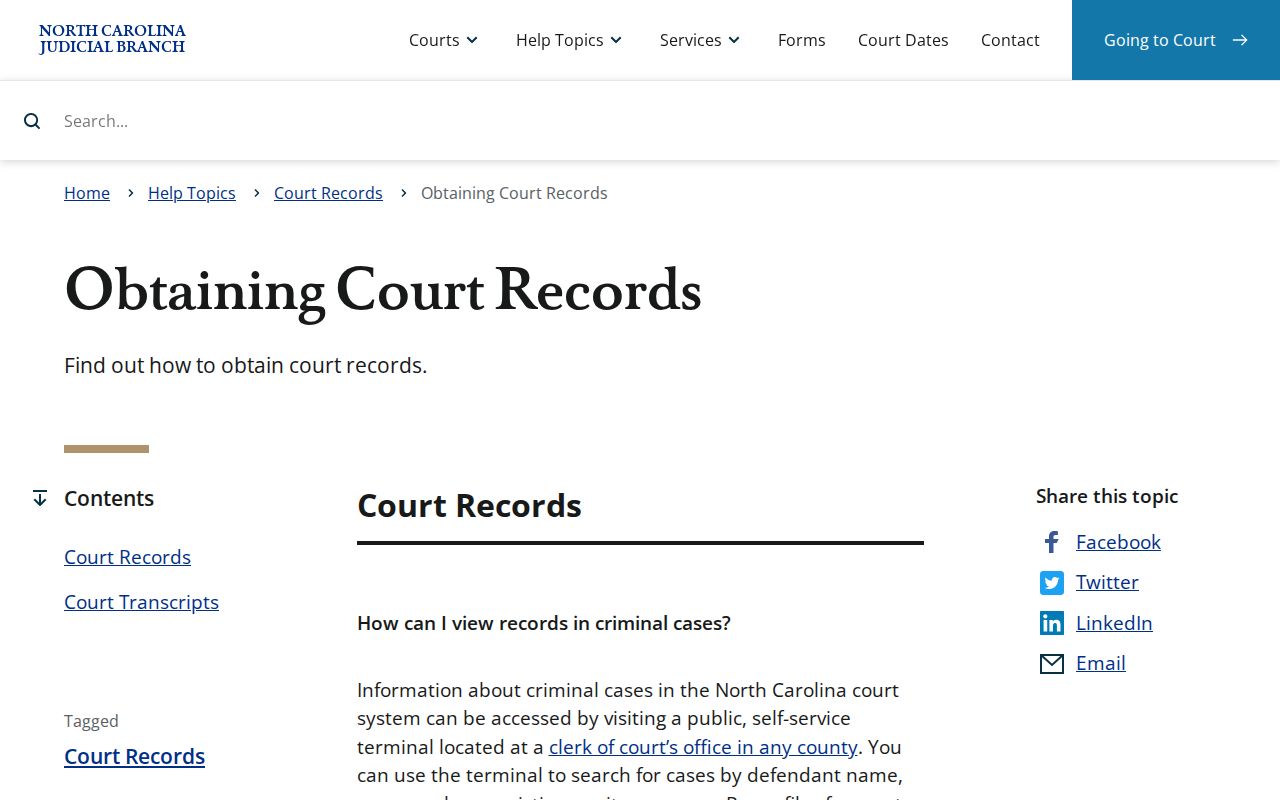
The line matters here. A public lookup tool shows summarized case information, while the Clerk-held file is what you inspect or copy officially in Graham County.
Types of Court Records
Graham County organizes court records around the court file and case history, not a separate county records department. A public result may show only the Case Summary material available. What you can reach depends on the case type, its public status, and whether you want a document, copy, transcript, or audio.
- Case Summary or Register of Actions: the Portal chronology of public case information and events.
- Filed documents: public pleadings, notices, orders, and judgments in the Graham County court file when available for inspection or copying.
- Hearing and disposition information: case events, hearings, results, and financial information when the Case Summary contains those areas.
- Certified copies and exemplifications: Clerk-issued forms of a copy when the requesting purpose requires authentication.
- Audio or transcripts: separate record products with their own routes and availability limits.
Civil, criminal, estates, and nonconfidential special-proceeding files all stay inside the unified Clerk structure in Graham County. The Register of Deeds is a different office entirely, handling deeds and vital records. And the County Clerk is not the local custodian of court case files.
Graham County Court File Fallback
A blank Portal result is not proof that no Graham County court file exists. Check name spacing, name order, and case-number format first. The matter may be restricted, confidential, sealed, or expunged. It may be not yet processed, or simply easier to reach through the Clerk. Statewide records guidance also recognizes that paper files are viewed at the Clerk's office. That office sits in the county where the case is located.
That local fallback is the Graham County Courthouse. Public self-service terminals at clerk offices can search criminal matters by defendant name, case number, victim, or witness name. The same terminals cover civil, special-proceeding, and estates access. Officials do not state a terminal count or a specific terminal location in Graham County. Call ahead when terminal access, an old file, or a protective-order confirmation matters to your trip. Copying assistance is one more reason. The Graham County Courthouse page identifies the court location for this route.
What a Court Record Contains
A Graham County Case Summary usually opens with a case number and status. It then lays out available information in separate areas. The Portal calls its chronological entries Case Events. An event proves something happened in the case. It is not automatically the underlying document, and it does not explain every legal consequence. Read the latest event alongside the Hearings and Dispositions areas whenever they appear.
| Case Information | Core case identification, including the assigned case number and status where available. |
|---|---|
| Assignment Information | Court or assignment information displayed for the case. |
| Party Information | Publicly returned party details, subject to Portal privacy limits. |
| Case Events | The dated procedural chronology, such as a filing, hearing-related action, or disposition event. |
| Hearings and Dispositions | Current or recorded hearing and outcome information when the case contains those sections. |
| Financial Information | Financial information when present and publicly available. |
Filed documents can supply the pleadings, notices, orders, or judgments behind an entry. Their availability is separate from the event list. Confidential, sealed, or restricted Graham County court records will not behave like ordinary public Portal results.
Graham County Court File Request Limits
The Judicial Branch Public Records Request form is a real state form. It is not, however, a Graham County court-file copy form. Its purpose is existing Judicial Branch administrative records. The form itself states that NCAOC is not the custodian of court documents or case information. It sends court-document seekers back to the local Clerk. So a state administrative request should never replace a request to the Graham County Clerk of Superior Court. The official page spells that division of duties out plainly.
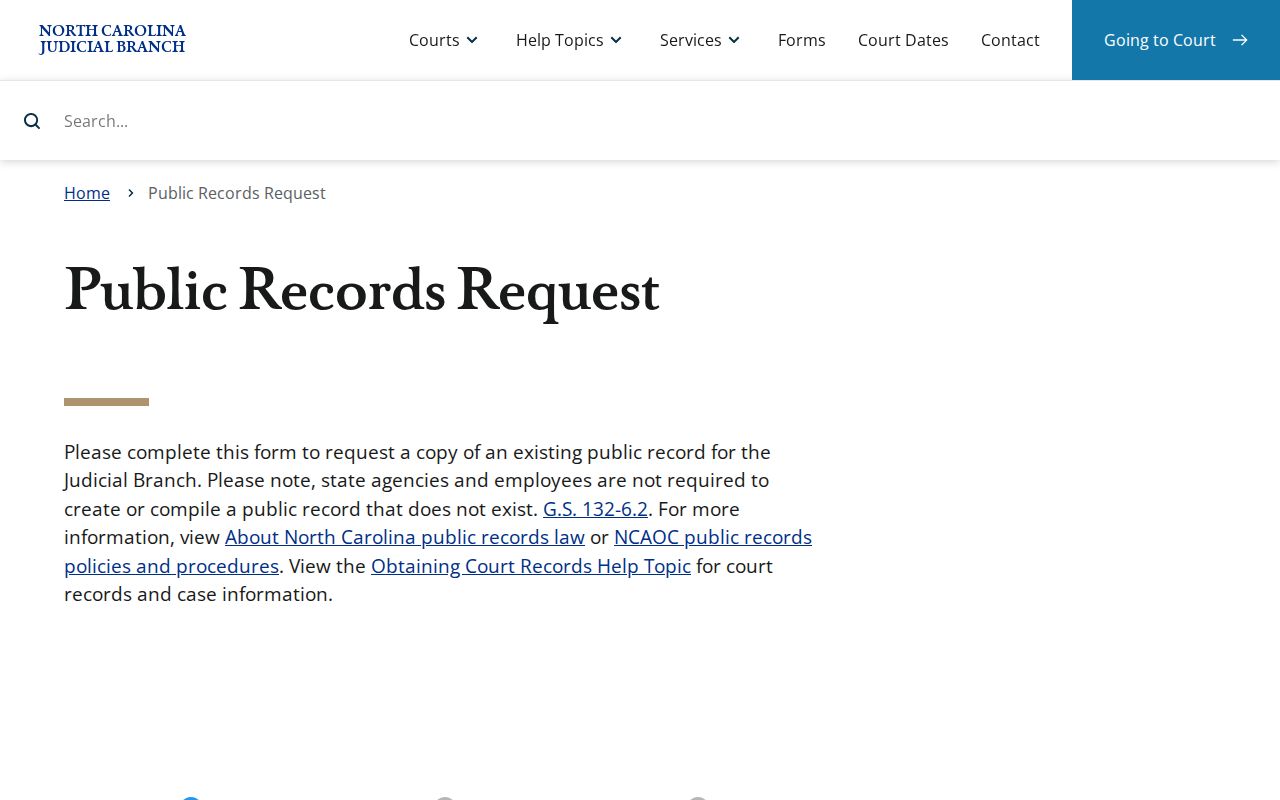
For Graham County court records, the form image is a reminder to send a case-file request to the Clerk rather than to the statewide administrative channel.
That boundary is useful when the record sought is a filing, order, judgment, docket entry, or other case-file material. The Clerk may also be the right contact when a Portal result needs an official copy or when public terminal or paper-file inspection is needed. The state routing page separates the court-file path from the administrative-record path.
The Judicial Branch routing information makes that custody distinction explicit.
The Judicial Branch record-routing page also separates the court-file and administrative-record channels.
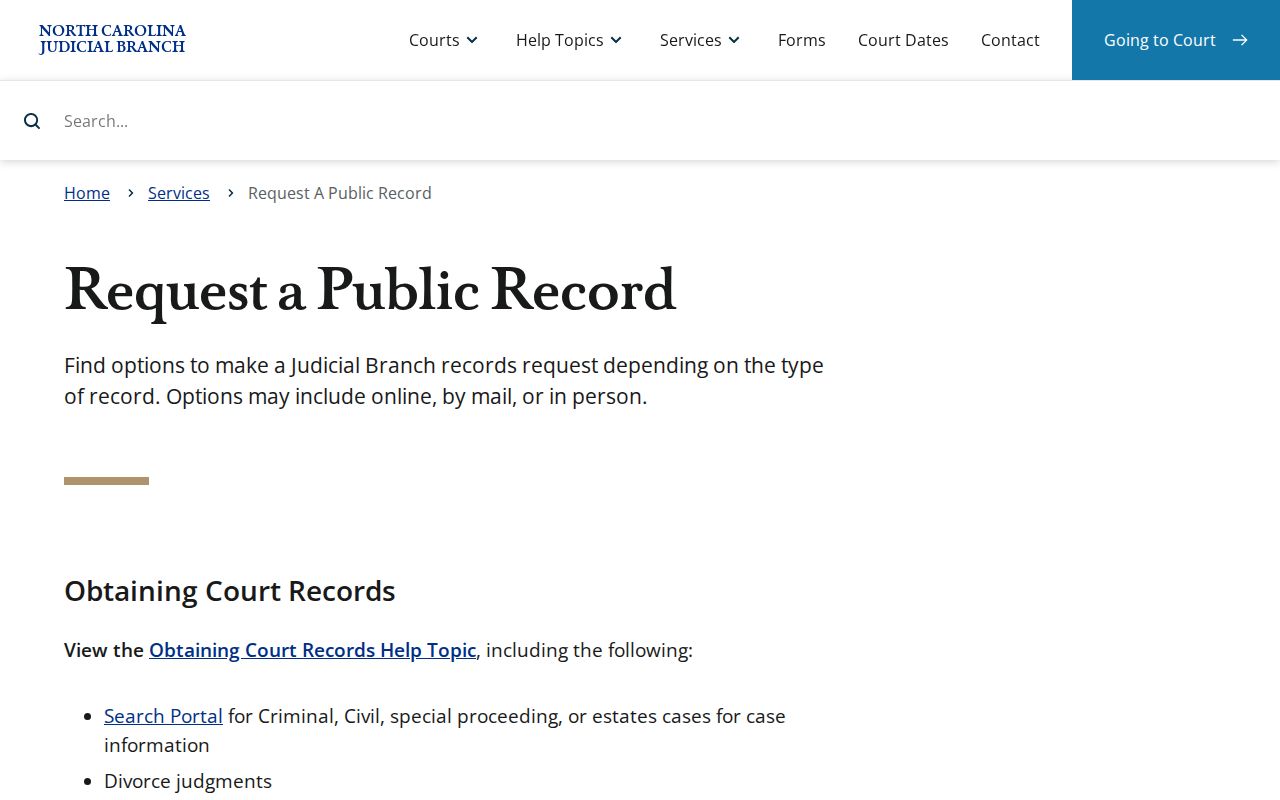
The routing rules point the same way: case documents stay with the local Graham County Clerk.
Certified Copies and Fees
A plain copy and a certified copy are not the same thing. A plain copy is made straight from the court file. A certified copy adds a certificate under seal. That is the Clerk's authentication, used when that form is appropriate. An exemplification is a separate statutory form of authentication. Before ordering, ask the Graham County Clerk which type your purpose requires. The statutes set the amounts, but they create no special flat fee for a docket sheet. The court lists no Graham County digital-copy or turnaround fee.
| Graham County court record item | Statutory amount |
|---|---|
| Preparation of the first page of each document | $2.00 |
| Each additional page or fraction of a document | $0.25 |
| Certificate under seal | $3.00 |
| Exemplification | $10.00 |
The fee provisions appear in N.C.G.S. § 7A-308, the source used for this Graham County court records schedule.
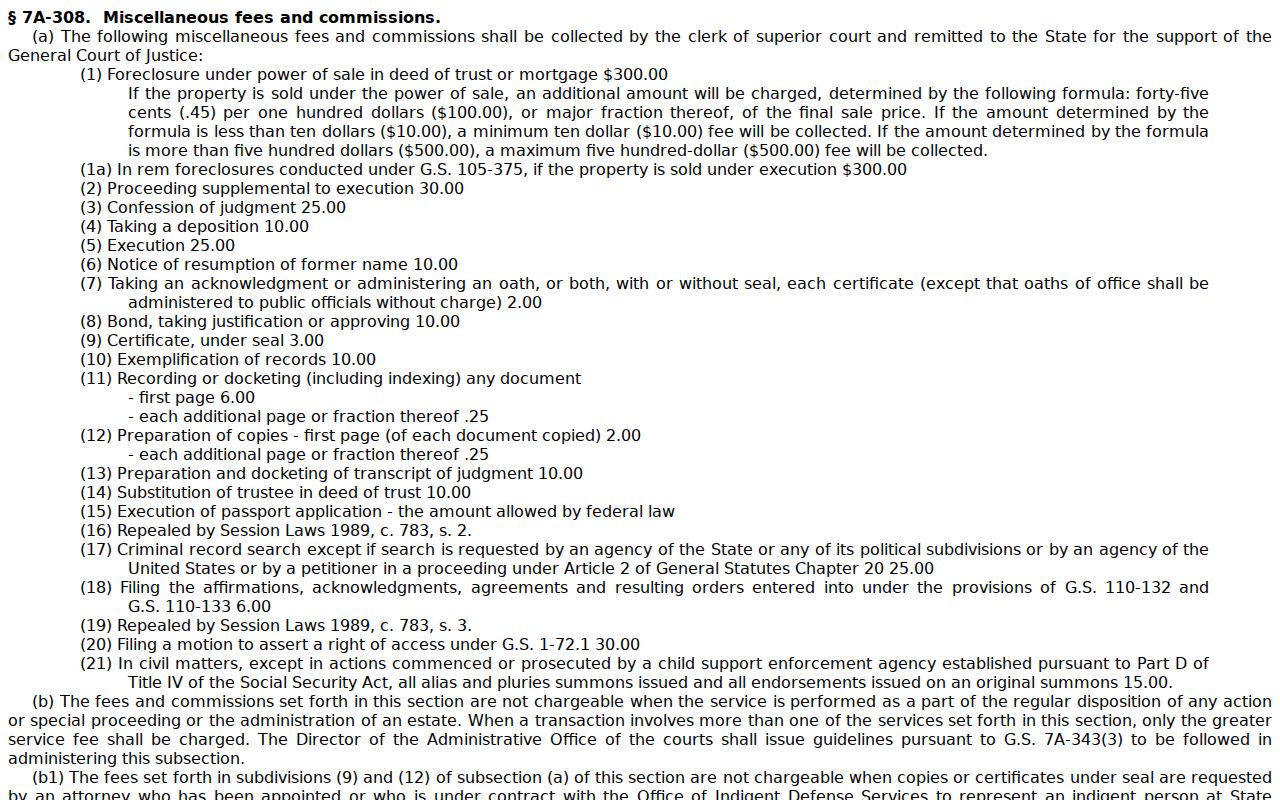
The statute sets the listed Graham County amounts. The Clerk confirms how each fee applies to the documents you request.
Graham County Clerk of Superior Court
Graham County Courthouse
12 Court Street
Robbinsville, NC 28771
Mail: PO Box 1179, Robbinsville, NC 28771
(828) 479-7000
Graham County Record Audio and Transcripts
A transcript is not an ordinary Clerk copy. The Judicial Branch sends transcript requests to the court reporter or transcriptionist. That person's rate is set independently. Not every proceeding gets recorded. Criminal District Court proceedings generally are not, except as the Judicial Branch states. So name the transcript separately when you request a Graham County court record. Do not assume the Clerk produces one from the Case Summary.
For an available nonconfidential digital recording, the state uses form AOC-G-114 and charges the actual CD cost. A confidential matter calls for AOC-G-115 and court permission. Graham County posts no separate transcript rate. It lists no audio processing time or local audio-request form beyond these statewide paths.
Note: Ask the Graham County Clerk which office or reporter handles the proceeding. Do that before you send payment.
Public Access and Sealed Records
Public access to Graham County court records starts with a simple rule. Clerks maintain the files, dockets, and indexes. Records are open to public inspection unless a law closes them. Portal puts public Case Summary information online with no registration required. Yet online access does not shift the Clerk's role. The Clerk remains the local holder of the record. A public record may not be fully online. Clerk-office terminals and nonconfidential paper files fill the gap.
North Carolina access rules: N.C.G.S. § 7A-109 requires clerks to maintain court records and permits public inspection unless access is prohibited. N.C.G.S. § 132-6 addresses inspection and copies on payment of lawful fees. N.C.G.S. § 1-72.1 provides a civil judicial-record access and sealing procedure.
Juvenile records carry their own confidentiality limits. Sealed, expunged, and confidential matters never show up in an ordinary public Portal search. Some protective-order or domestic-violence cases stay out too. Portal also masks or excludes some personal details. The Clerk can address access to a Graham County case. Court staff cannot give legal advice on a sealing or expunction question. The Clerk recordkeeping and public-inspection statute sets out the official rule.
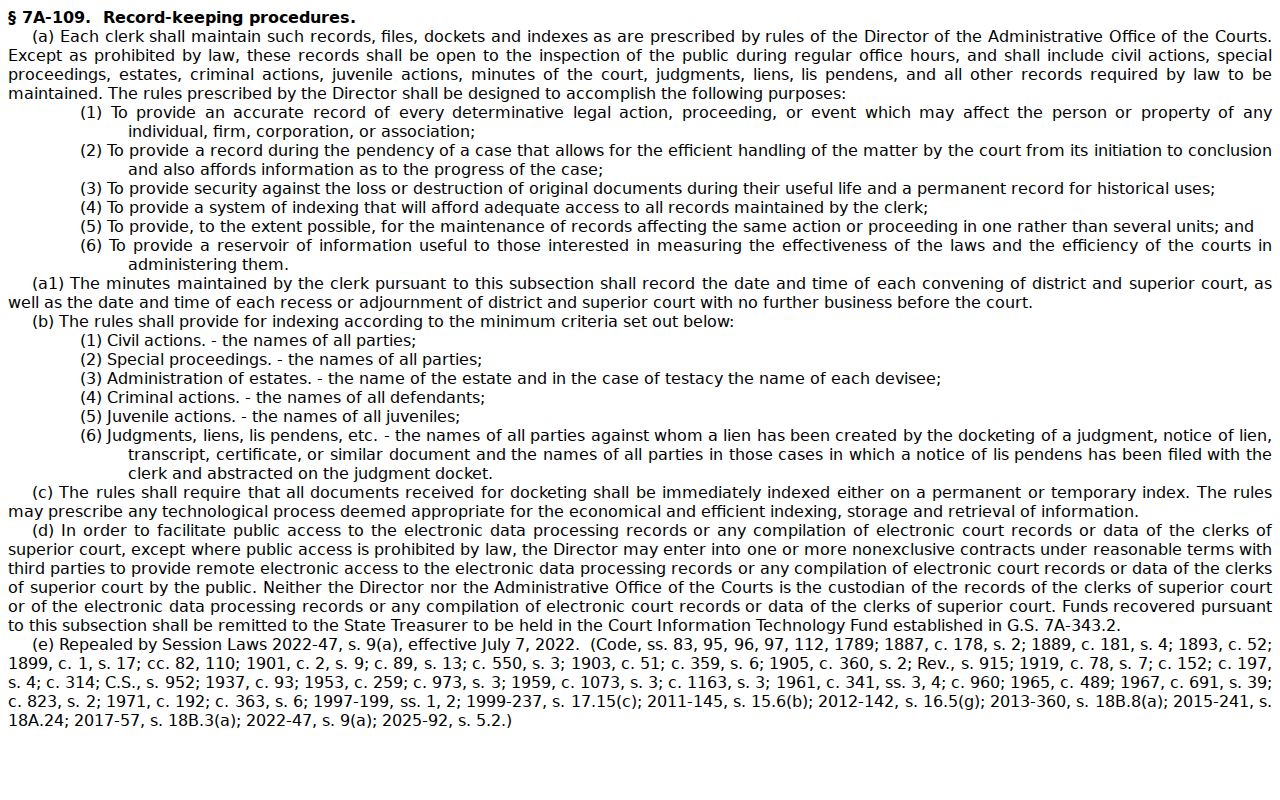
The Graham County court records route is a public-record route. It works only where the case material itself is open to inspection.
Graham County Sealed Record Questions
A missing Graham County result can mean several things. Maybe the name or format was off. Or the case has not processed yet. It could be a confidential matter, or a sealed or expunged record. One thing it does not do: establish any particular outcome. Check the search details you have. Then ask the Graham County Clerk whether the case is open to public access.
A civil judicial-record access dispute follows a motion procedure under state law. An expunction question turns on the applicable statute and case category. Graham County sets no local expunction filing fee. It offers no individual local form, so no local amount appears here.