
Graham County Court Docket Map
Graham County runs its courts through one structure. The county court landing page puts everything in one spot. It gathers the District Court, the Superior Court, local calendars, payments, and related court services. That setup helps when a search result shows only a division or a case status with no clear next step. The Graham County Clerk of Superior Court holds the case files and docket indexes for local state-court matters. Most record questions end up there. The county government clerk and the Register of Deeds handle separate jobs. They are not the place for a court docket.
The route still depends on the question. The statewide portal is the usual first stop. Use it for a public Graham County court docket search. A current hearing calls for the portal's hearing search plus the local calendars. Certified copies, paper files, and restricted-record questions belong with the Clerk of Superior Court. There is no separate county criminal portal, civil portal, justice-of-the-peace docket, or published city court database to try first.
That official page shows the local service route in plain form.
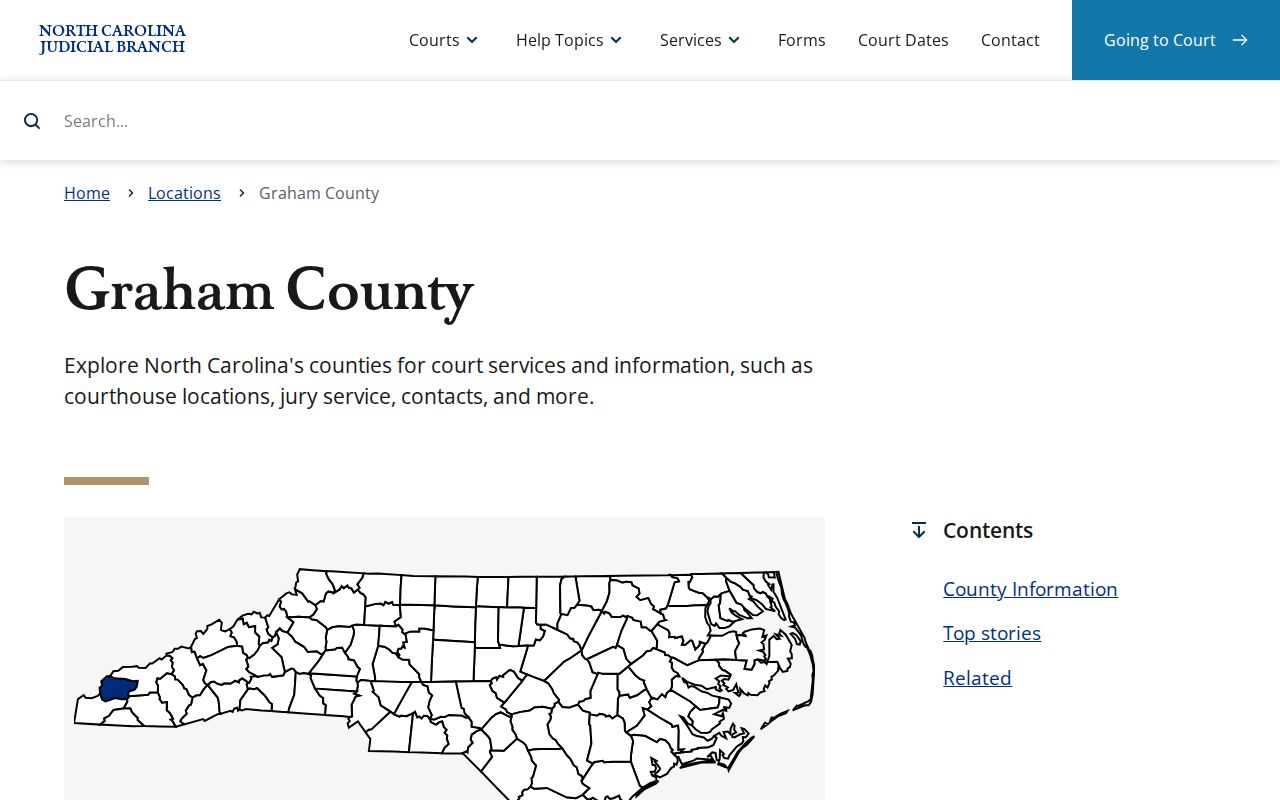
Its county-level service links fit the one-clerk, one-courthouse access model behind Graham County court docket records.
How to Search the Graham County Court Docket
Start with the North Carolina eCourts Portal and its Smart Search tool. Smart Search returns a public Case Summary. That view is also called the Register of Actions. A known case number is the cleanest key. A properly formatted party name works too. Public information is searchable without registration. An account mainly helps with saved cases rather than unlocking ordinary public records. A broad result list calls for filters. Apply the location and case-category filters to zero in on Graham County and the right case type.
Treat the result as a timeline, not a final legal conclusion. Check the case number, assignment, status, recent Case Events, and any Hearing entry. If you need to know when and where a case is set, switch to Search Hearings rather than trusting an older event. The portal is a research tool, not the certified record. For an official copy, a paper file, or a result that needs local confirmation, the Graham County Clerk is the next route.
- Open Portal Smart Search and enter the known case number or a properly indexed party name.
- Use Advanced Filtering to select Graham County and narrow the case category or status when the first results are too broad.
- Open the Case Summary and check the case status, latest Case Event, dispositions, and hearing information.
- Use Search Hearings for a current location and time, then compare it with the local calendar if a session view is needed.
- Call or visit the Clerk for a nonconfidential file, a public terminal, or a certified copy.
The Judicial Branch services hub places Portal among the state’s court-access tools.
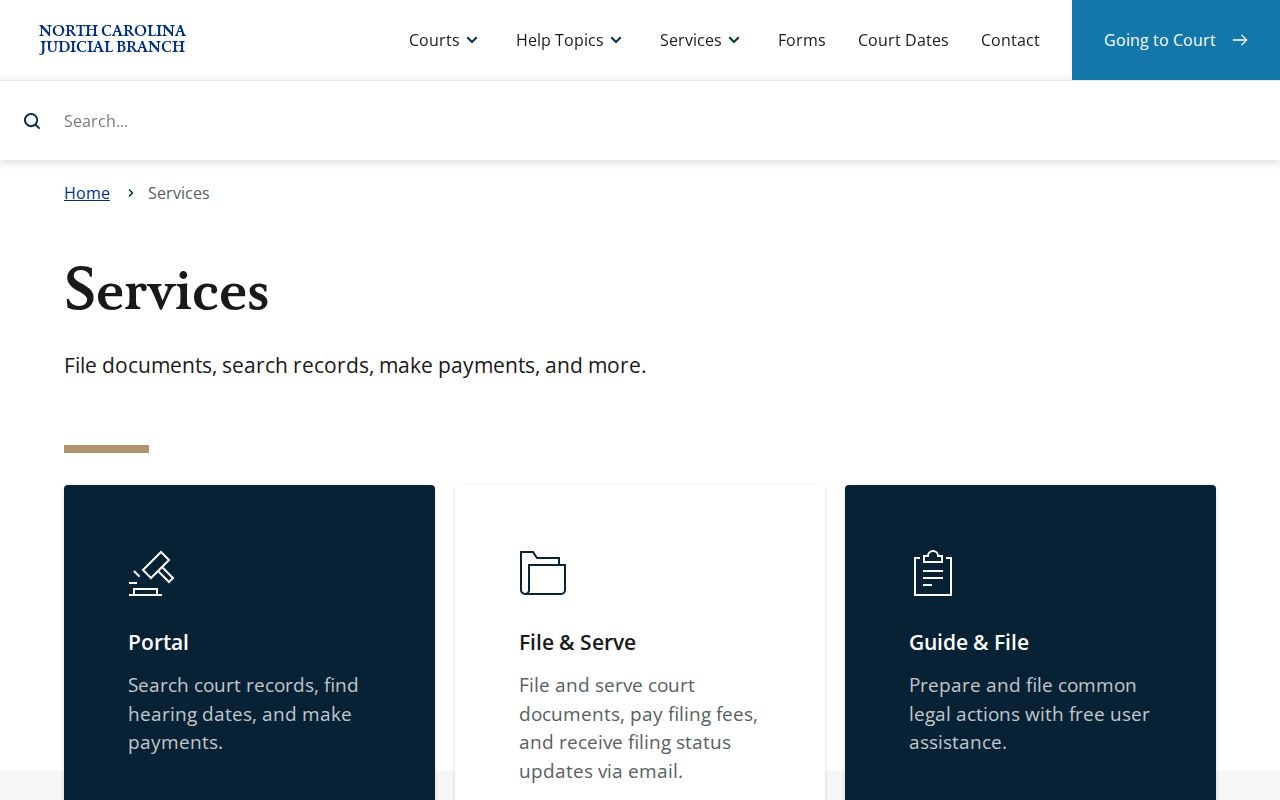
The statewide services supplement the Graham County Clerk's official record function rather than replace it.
Graham County Court Docket Portal
For Graham County, the portal offers one online layer covering public criminal, civil, estates, special-proceedings, judgment, and eligible payment information. Smart Search pulls up a Case Summary. Search Hearings covers current calendar information. NC Judgment Search is an index search, and Make Payments handles only eligible criminal items. Each tool answers a different question. A judgment-index match or a payment screen never substitutes for the full Graham County court docket.
Smart Search starts with a name or case number. Advanced controls filter by location, date of birth, category, type, and status. Official guidance notes that broad party searching works most consistently inside Smart Search itself. Business Name sits under Advanced Search. For a case-number wildcard, enter at least four known characters before an asterisk. For a name wildcard, enter at least three surname characters and one first-name character before the asterisks.
| Portal tool | Best Graham County use | Important limit |
|---|---|---|
| Smart Search | Public Case Summary and Case Events | Not the official certified court record |
| Search Hearings | Current hearing location and time | Does not label a result virtual or in person |
| NC Judgment Search | Judgment-index details by party or case number | Use Smart Search or the Clerk for fuller context |
A missing portal match may just reflect formatting, filtering, timing, or access restrictions. It does not prove a Graham County court docket is absent.
The official Portal interface is the public search entry point for Graham County.
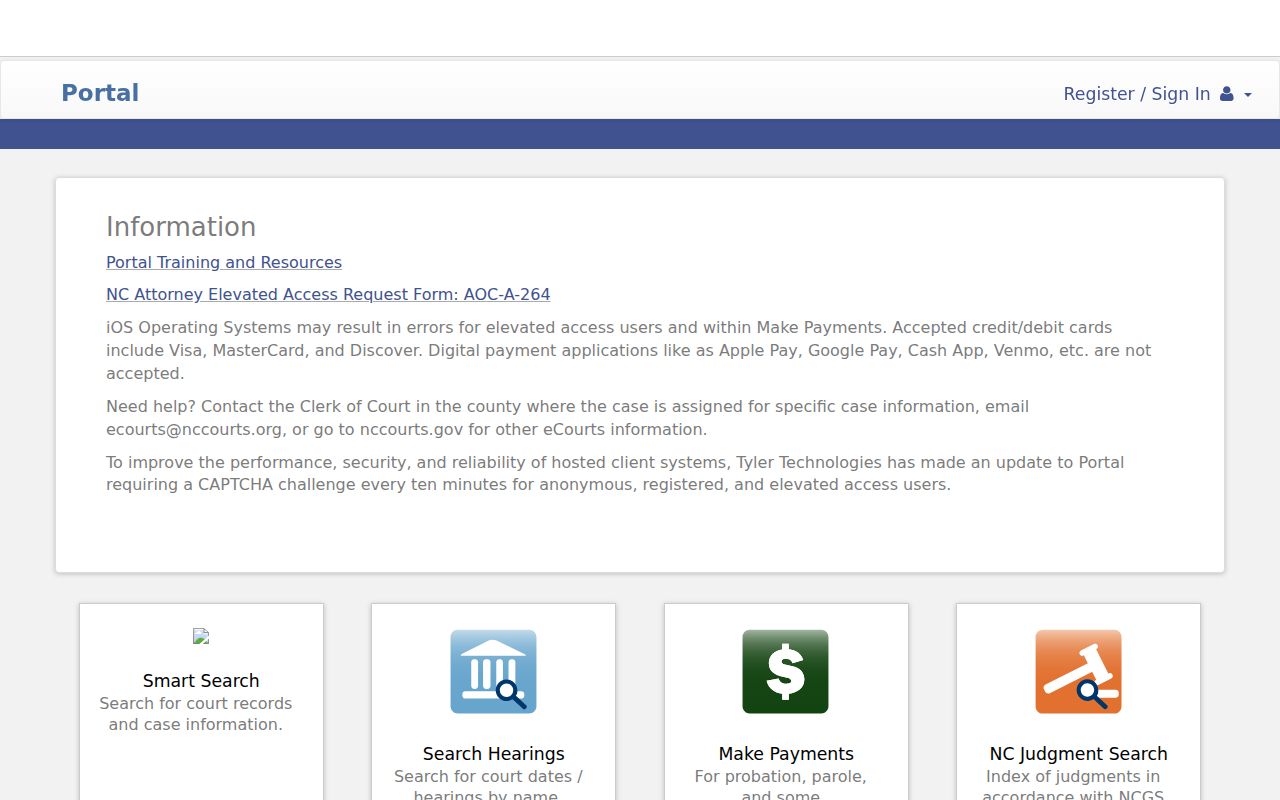
Its statewide filters help most when a name search needs narrowing back to Graham County.
What a Court Docket Shows
North Carolina's portal labels the Graham County court docket view a Case Summary or Register of Actions. Depending on the case, it can show Case Information, Assignment Information, Party Information, Case Events, Dispositions, Hearings, and Financial Information. Civil, family, probate, and mental-health cases can add a Cause of Action area. A field's presence means the information exists in that part of the case. It is not a promise. Not every underlying document image is public or downloadable.
Begin with the case number and status, then work through the dated events. A hearing entry answers the immediate date question. A disposition names a recorded result category. Read each entry in context. A pending status, a reopening, an appeal, a transfer, or a remand can change the practical next step. Need the authoritative wording in an order? Ask the Graham County Clerk about the underlying public file.
| Case number | The court-assigned identifier for one file; use it as the most precise Portal search key. |
|---|---|
| Assignment | Shows the court or judicial assignment area where data is available. |
| Case Events | The chronological procedural actions recorded in the Case Summary. |
| Hearings | Current or recorded setting information when the case includes it. |
| Disposition | A recorded outcome category that may need the related order for full context. |
| Financial information | Information present in the case view; current amounts should be confirmed through Portal or the Clerk. |
Graham County Court Docket Terms
The portal's labels look plain, but one wrong reading can cost you. A Case Event is one dated step in the chronology. A Hearing is a court event on the schedule. A Case Summary pulls those pieces together as the navigation view. Know the search's limits too. It does not list victims as parties, and it masks date-of-birth details in results. There is no Social Security number validation. You cannot pull up a criminal case by charge wording.
Some labels describe a stage, not a legal outcome. "Transferred to Superior Court" means the case moved to a different court level. "Trial De Novo" can mark a new Superior Court trial. It follows a District Court criminal appeal. "Stayed" signals that activity may be paused. Open the related event. Or ask the Clerk about a public document before reading more into the label.
- Case Summary / Register of Actions
- The public chronological view of docketable case information, not a certified copy.
- Case Event
- A dated procedural action, such as a filing-related event, hearing, service action, or disposition.
- Continuance or reset
- A court date that moved; compare the later Hearing and Case Event instead of relying on the first date found.
- Judgment index
- A searchable judgment record that should be followed back to the Case Summary or Clerk record for fuller context.
The portal training materials walk through the Case Summary and hearing tools you will rely on for any Graham County court docket lookup.
Those training resources also draw a clean line between a Portal timeline entry and the official case file the Graham County Clerk of Superior Court keeps.
Which Courts Keep Dockets
Graham County belongs to North Carolina's unified General Court of Justice. One office keeps the records. That is the local Clerk of Superior Court. The clerk maintains dockets for both trial divisions plus the clerk-centered case types. Superior Court District 43A handles felony trials. It also takes District Court appeals and civil claims above the statutory dividing line. District Court District 43 covers misdemeanors, traffic infractions, family matters, and smaller civil cases. Magistrates sit inside the District Court framework. They take small claims plus certain preliminary matters.
A case can move between levels without changing record keepers. A felony may show early District Court activity. Its Superior Court stage comes later. Civil cases land in a division based on the amount claimed. So a Graham County court docket search works best with the case number, the case category, and the court assignment. Never assume every local matter shares one calendar or courtroom.
| Court | Docket covers | Where to search |
|---|---|---|
| Superior Court District 43A | Felony trials, District Court appeals, and civil actions above $25,000 | Portal, calendars, and the Graham Clerk |
| District Court District 43 | Misdemeanors, traffic, family matters, and civil actions at or below $25,000 | Portal, schedules, and the Graham Clerk |
| Magistrate / Small Claims | Small claims and statutory preliminary matters within the District Court system | Portal or Clerk, with local magistrate contact when appropriate |
Graham County Court Docket Levels
The $25,000 civil dividing line is the single most useful routing fact in a Graham County court docket search. That one number routes a case. Under N.C.G.S. § 7A-243, civil actions at or below that figure belong in District Court. Anything above it belongs in Superior Court. Small claims stays in the magistrate and District Court channel. Knowing the split explains a court assignment on Portal, but it does not override the actual filings or a court order.
Criminal dockets follow a different path. District Court takes misdemeanors and traffic matters. Serious felony trials sit in Superior Court. Watch for statuses like "Transferred to Superior Court," "Appealed," or "Trial De Novo." Each one tells you to check the receiving court level and the events that follow. The North Carolina Court of Appeals serves as the intermediate appellate court. The trial-court Case Summary on Portal remains the first stop for a local case lookup.
Need county-level numbers? The Judicial Branch data and statistics page lists the statewide report categories that cover Graham County court activity.
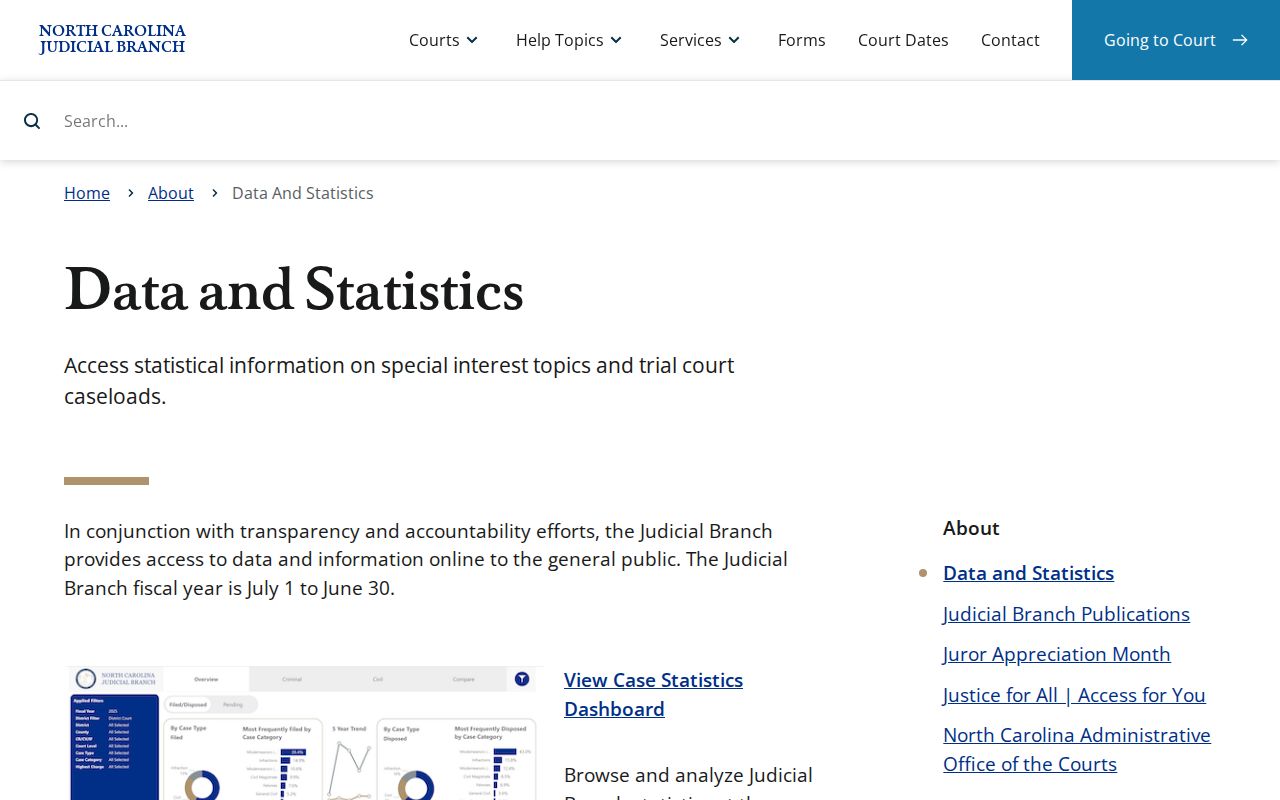
These reports split cases into categories rather than building a separate Graham County court docket portal for each one. One docket system covers them all.
Finding Court Dates and Settings
Start with a date you already have. A citation, notice, summons, bond form, or your most recent court filing will carry one. From there, pull up the public Case Summary. Look at the latest Case Event, the disposition, and the Hearings area. An old setting is not always the next one. For a current date, Portal Search Hearings is the sharper tool. It accepts a case number, party name, business, attorney, attorney bar number, judicial officer, or courtroom, and it can return where and when a hearing sits now.
Graham County also posts a local administrative schedules page. It carries a District Court schedule plus Civil Calendars and Criminal Calendars. Those give you a session-wide or court-wide view. Still, a calendar PDF should never outrank a later case-specific entry or a court order. One gap exists. Search Hearings will not tell you whether an appearance is virtual or in person. When that is unclear, ask the Clerk or the courtroom contact. The full Graham County court calendar route shows how all these channels fit together.
Graham County Court Docket Calendars
Start with Portal Search Hearings when you want a date on one live case. The Case Summary's Hearings section adds context around that same matter. For wider planning across the civil and criminal calendar systems, turn to the Graham local administrative schedules page. It also links the District Court schedules. Each layer covers what the others leave out. A careful docket search moves from the case to the session list instead of trusting one calendar.
Looking for a courtroom or a judicial officer? Use the matching Search Hearings field. Already hold a case number? That is usually the stronger tool for a current hearing date. Court calls run in varying orders. A session list never promises when your case will be reached. Confusing results can go straight to the Graham Clerk, who can confirm the right local record route. The clerk publishes no standing remote-hearing link, no universal docket-call time, and no county-specific virtual calendar.
Note: A court order beats a calendar publication every time. A fresh case-specific entry is safer than an old printed schedule.
Public Access to Dockets
North Carolina law lets the public inspect court records. Confidential material stays protected. Locally, the Graham Clerk of Superior Court holds that responsibility. Portal puts Case Summary information online. Its own official materials state plainly that it is not the official court record. Beyond the portal, a clerk-office terminal and nonconfidential paper files remain documented access channels. One caution applies here. The state Judicial Branch public-record form covers administrative records in its custody, so it cannot replace a Graham court-file request.
Public access does not promise that every case shows up in an ordinary search. Sealed, confidential, restricted, and juvenile matters all follow separate rules. Protective-order material may carry restricted online indexing. Sometimes a missing result just reflects a name, format, filter, or processing issue. Search carefully first. Then ask the Clerk about the public-access route for the specific Graham County court docket or file you need.
Key Rules:
N.C.G.S. § 7A-109 requires clerks to keep prescribed files, dockets, and indexes and generally opens them to inspection when law does not prohibit it.
N.C.G.S. § 132-6 addresses reasonable-time inspection and copies on payment of lawful fees.
N.C.G.S. § 1-72.1 supplies a civil judicial-record access motion process and addresses sealing requests.
N.C.G.S. § 7B-300 places juvenile records under separate confidentiality limits.
Graham County Court Docket Limits
A blank public result is never a final answer on a Graham County court docket. Check the spelling and name order first. Compound names trip up searches. Then verify the case number, case category, location filter, and case status. Advanced Filtering can narrow a broad search fast. Historical events converted into Odyssey before Graham County's July 2024 eCourts transition may carry a 12:00 a.m. time stamp. That conversion artifact proves no overnight filing or hearing.
Public Portal results also omit sealed, confidential, and restricted material, and juvenile records are not open to ordinary users as a public case route. Clerk-office public terminals remain a documented alternative for nonconfidential file work and some protective-order confirmation. When a record needs a legal-access determination, the Clerk is the local decision point. Staff will explain the record channel and the copy process, but they cannot hand out legal advice about a case or an access claim.
Note: Search results are just a start. A certified or otherwise official Graham County court record comes only from the Clerk.
The Clerk and Docket Records
The Graham County Clerk of Superior Court keeps the state-court docket files for the whole county. That includes Superior Court, District Court, magistrate and small-claims activity, criminal, civil, estates, and special proceedings. Do not confuse this office with the county government clerk or the Register of Deeds. Need a public terminal, a paper file, or protective-order confirmation? Call ahead. The same goes for copying help or an older record. The clerk publishes no terminal count, no terminal room, and no dedicated online certified-copy form. No turnaround time is promised either.
The Judicial Branch lists the courthouse visit address as 12 Court Street in Robbinsville. The Clerk's mailing address is PO Box 1179. A county directory formats the physical address differently for the same courthouse campus, so a quick phone call makes sense before a large request or counter visit. Do Portal and calendar tools leave a question open? The Clerk's main line is the documented fallback.
Graham County Clerk of Superior Court
Graham County Courthouse
12 Court Street
Robbinsville, NC 28771
Mail: PO Box 1179, Robbinsville, NC 28771
(828) 479-7000
Monday through Friday, 8:00 a.m. to 5:00 p.m.
Graham County Judicial Branch courthouse details
The official Graham County courthouse page identifies the physical court-record location.
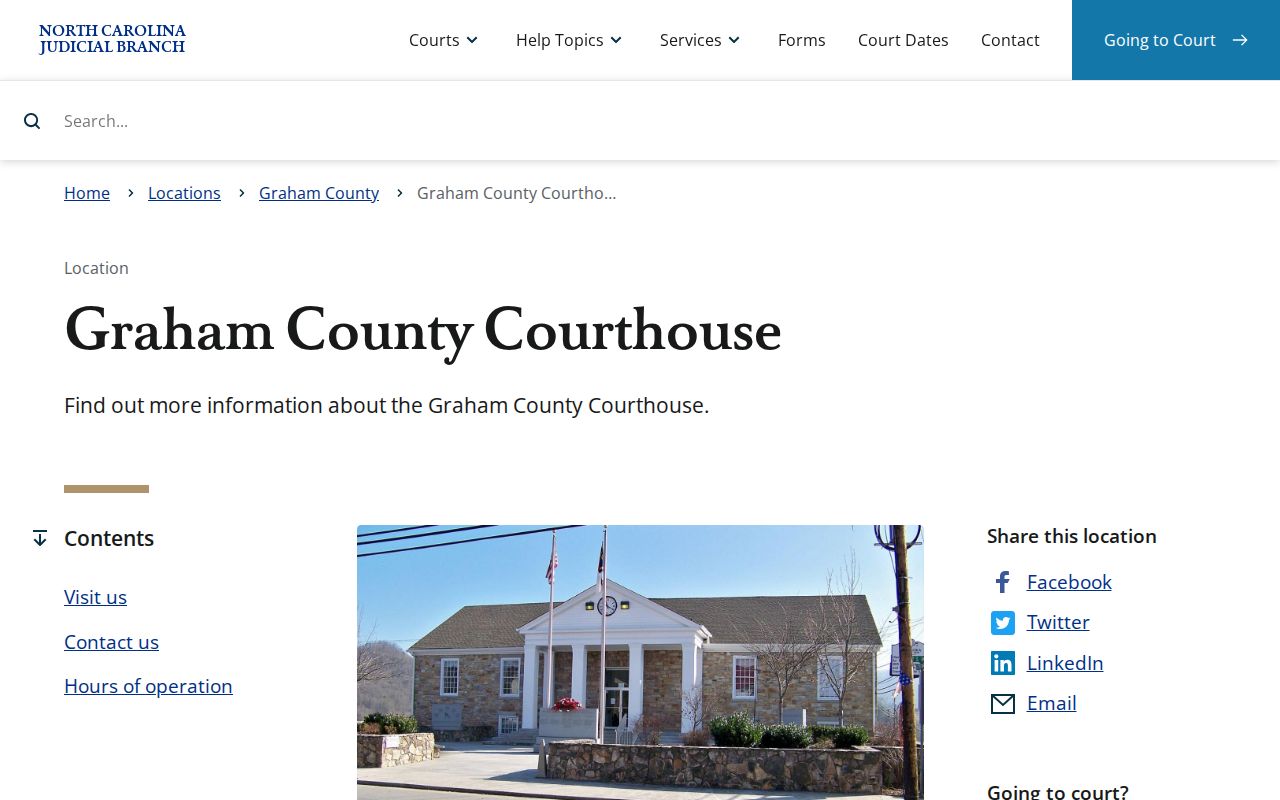
When the online Graham County court docket falls short, the courthouse and the Clerk counter are the local fallback. That is where files and official copies come from.
Graham County Court Record Copies
Treat these as three different things. A Portal Case Summary is the online chronological view of a case. A filed document is different. It might be a pleading, notice, order, or judgment tied to an event, subject to public-access and processing limits. A certified copy is a Clerk-authenticated record. Use it for any purpose demanding official certification. Bring a Portal case number and document date if you have them. Then tell the Graham County Clerk exactly which record and copy type you want.
N.C.G.S. § 7A-308 sets the fee baseline. It charges $2 for the first page of each document, $0.25 for each additional page or fraction, $3 for a certificate under seal, and $10 for an exemplification. Ask the Clerk for the exact total before any large request. The Judicial Branch administrative public-record form cannot fetch a county court file. The state form itself names the local Clerk as the court-document custodian.
| Need | Graham County route | Known fee fact |
|---|---|---|
| Public Case Summary | Portal Smart Search | No Portal viewing fee stated; not official record |
| Plain copy | Graham Clerk | $2 first page of each document, then $0.25 per additional page or fraction |
| Certificate or exemplification | Graham Clerk | $3 certificate under seal; $10 exemplification |
Court Dockets by City in Graham County
Graham County holds just three incorporated towns, according to the 2020 Census: Robbinsville, Lake Santeetlah, and Fontana Dam. Each has a town government. None runs its own court. No town publishes a municipal docket, a city citation-payment system, or a local court calendar. So a ticket listing a town address still does not belong to a town-run Graham County court docket. Read the paperwork instead. It names the court that actually handles the case, and from there the statewide Portal, the Graham County calendars, and the Clerk of Superior Court cover every record need.
The courthouse sits in Robbinsville, and each town page below sorts out the difference between municipal contacts and state-court record custody. Town population figures help with local context. They do not change where the docket lives. For that, county-level Judicial Branch records remain the source. The Census Bureau's Graham County profile adds the county population backdrop.
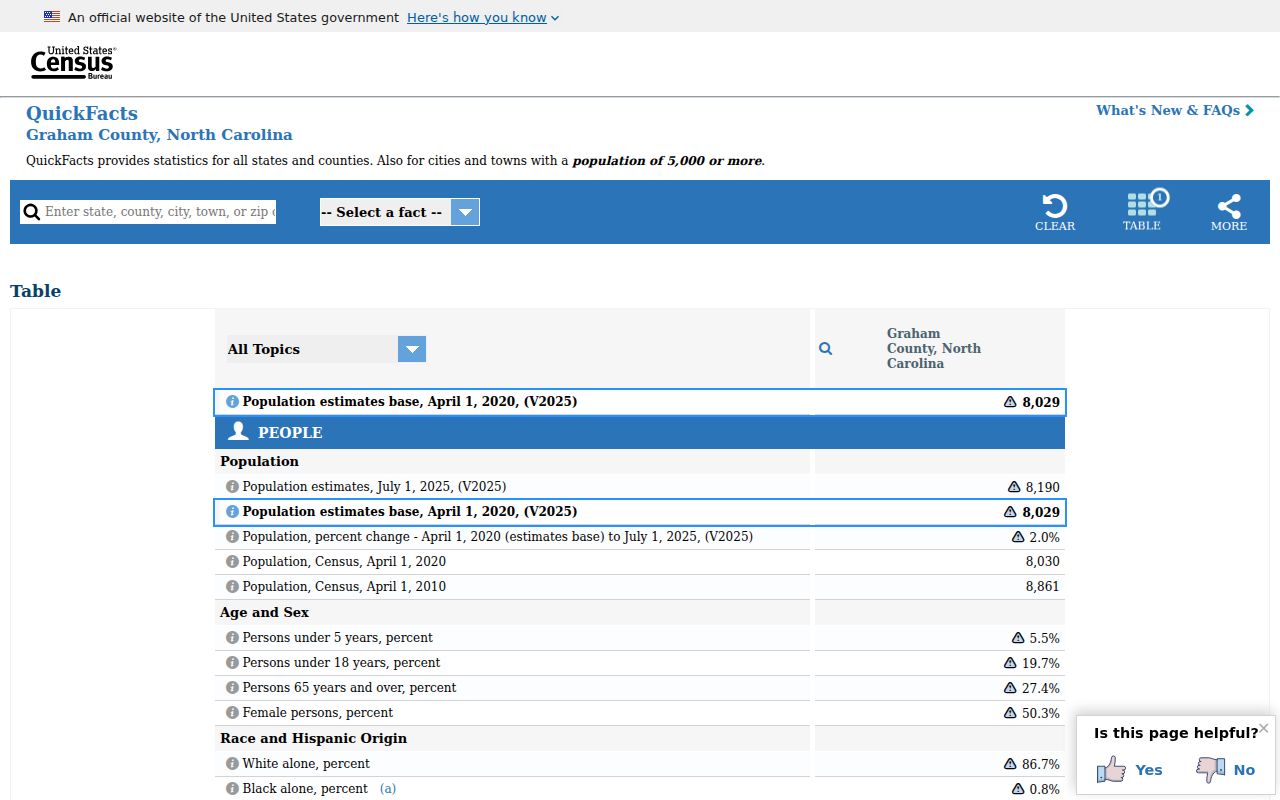
Graham County has three incorporated towns. Locals use them as reference points. Court dockets, though, do not sit in each town hall. Graham County court docket access stays centralized in the state court and Clerk system.
For a wider view, the Judicial Branch annual reports page offers statewide court-report context.
Those reports cover county-level court business and offer no sign of any separate municipal court system in Graham County.
Robbinsville Court Docket
2020 Census population 597. The county seat’s Town Hall is separate from the Graham County Clerk and courthouse.
Lake Santeetlah Court Docket
2020 Census population 38. No separate town court search or calendar was published in the source sweep.
Fontana Dam Court Docket
2020 Census population 13. Court paperwork should identify the actual county and court before a search begins.
Map and Directions to the Graham County Courthouse
Graham is a single-courthouse county: Superior Court, District Court, magistrate/small-claims activity, estates, and special proceedings all sit at the Graham County Courthouse in Robbinsville under one Clerk of Superior Court. There is no separate criminal justice center or municipal court building elsewhere in the county. The Judicial Branch's own courthouse page gives the visit address as 12 Court Street, while the county Clerk directory lists 12 North Main Street for the same courthouse campus, so calling ahead is sensible for a counter visit or a large record request.
Graham County Courthouse
12 Court Street
Robbinsville, NC 28771
(828) 479-7000
Monday through Friday, 8:00 a.m. to 5:00 p.m.
Mail correspondence goes to PO Box 1179, Robbinsville, NC 28771. Magistrates can be reached at (828) 479-7019. No official source publishes a parking map, entry-screening list, or terminal count for the building, so call the Clerk before a special trip if a public terminal, older file, or accommodation is needed.